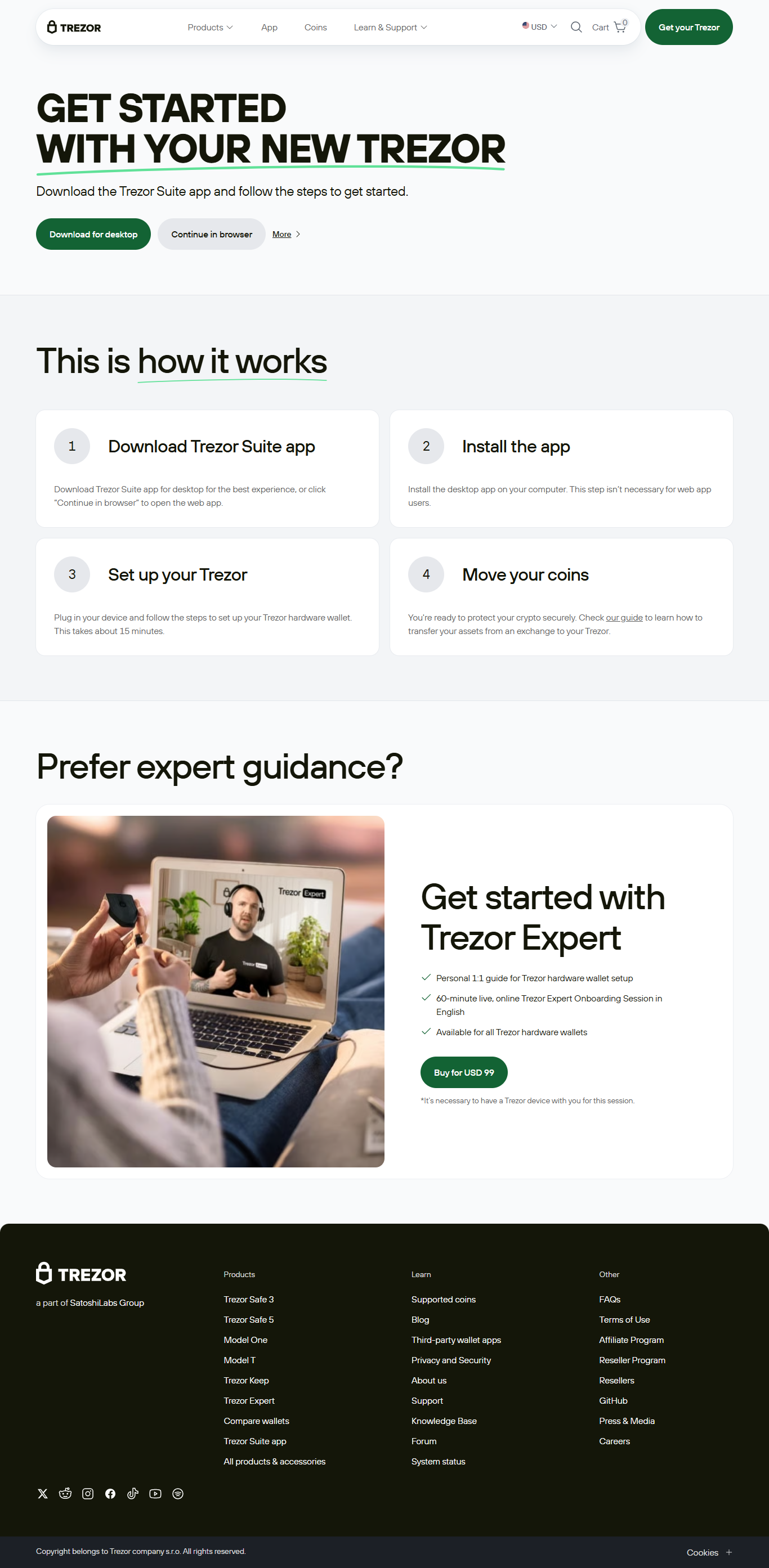
Trezor.io/start – Quick Setup for New Users
Cryptocurrency is reshaping the way people think about money, investments, and digital ownership. While it provides immense opportunities, it also introduces the challenge of keeping digital assets safe. Unlike traditional bank accounts, cryptocurrencies are self-custodied, meaning the responsibility for security falls directly on the user. A lost private key can result in permanent loss of funds.
This is where Trezor hardware wallets come in. Known for their industry-leading security, Trezor devices keep private keys offline while providing a user-friendly interface for managing crypto. To make onboarding seamless, Trezor provides a dedicated start page: Trezor.io/start. This portal guides new users through device setup, wallet management, and best practices for securing digital assets.
This article is a complete guide to Trezor.io/start, helping new users set up their hardware wallet quickly, securely, and confidently.
Why Trezor?
Before diving into the setup, it’s important to understand why Trezor is a trusted solution for crypto security:
Hardware-Level Security: Private keys remain offline and never leave the device.
Open-Source Software: Trezor’s firmware and software are open-source, allowing independent audits and full transparency.
Multi-Currency Support: Trezor supports thousands of cryptocurrencies, including Bitcoin, Ethereum, and various tokens.
Easy-to-Use Interface: Even beginners can manage assets with minimal technical knowledge.
Integration with Wallet Apps: Trezor works with Trezor Suite and other compatible applications for portfolio management.
By using Trezor, users gain full control of their funds while minimizing the risk of hacks, malware, or phishing attacks.
Step 1: Choose the Right Trezor Device
Trezor offers several hardware wallet models, including:
Trezor Model One: A cost-effective, beginner-friendly device supporting most popular cryptocurrencies.
Trezor Model T: Advanced hardware wallet with touchscreen, passphrase support, and enhanced security features.
When selecting a device, consider factors such as the number of cryptocurrencies you plan to manage, your security preferences, and whether you want a touchscreen interface for easier navigation. Both devices maintain the same high level of security for private keys.
Step 2: Visit Trezor.io/start
To begin the setup process, visit Trezor.io/start. This official portal provides:
Step-by-step instructions for device initialization
Download links for Trezor Suite, the official companion app
Best practices for setting up and securing your wallet
Troubleshooting and frequently asked questions
Using the official start page ensures you avoid counterfeit devices and malicious software, which are common risks in the cryptocurrency space.
Step 3: Unbox and Inspect Your Trezor Device
When your Trezor arrives:
Check Packaging: Ensure the box is sealed and untampered. Trezor devices come with tamper-evident packaging to protect against fraud.
Power On: Connect the device to your computer via USB. The Model T can also connect using a USB-C cable.
Follow On-Screen Prompts: The device will guide you through the setup process, including device naming and PIN configuration.
Proper inspection ensures that you start your crypto journey safely.
Step 4: Set a PIN Code
Setting a PIN code protects your Trezor device from unauthorized access.
Choose a unique and secure PIN that is not easily guessable.
Avoid writing it down digitally or sharing it with anyone.
Each time the device is connected, the PIN is required to unlock access.
This simple step provides an additional layer of security, even if the device is lost or stolen.
Step 5: Backup Your Recovery Seed
Trezor generates a 24-word recovery seed, which serves as a backup for your wallet. This is the most critical step in wallet security:
Write down the seed on the provided card or another secure medium.
Store it in a safe, offline location. Consider fireproof and waterproof storage options.
Never store the recovery seed digitally, take pictures of it, or share it online.
Your recovery seed is the key to restoring access to your funds if your device is lost, damaged, or stolen. Without it, your crypto is irretrievable.
Step 6: Install Trezor Suite
Trezor Suite is the official software companion for Trezor devices, available for desktop and mobile.
Download Trezor Suite from Trezor.io/start or the official app store.
Install the Application on your device.
Connect Your Trezor and follow the prompts to initialize and verify your wallet.
Add Cryptocurrency Accounts: Trezor Suite allows adding multiple accounts for different cryptocurrencies.
Trezor Suite provides a secure dashboard for portfolio monitoring, sending and receiving funds, and managing multiple cryptocurrencies in one place.
Step 7: Sending and Receiving Cryptocurrency
Trezor Suite makes sending and receiving crypto safe and simple:
Receiving Funds: Generate a receiving address in Trezor Suite and verify it on the hardware device to ensure it hasn’t been tampered with.
Sending Funds: Enter recipient address and amount in the app, then confirm the transaction on your Trezor device.
Transaction Fees: Choose recommended or custom fees for speed and cost optimization.
This dual verification process ensures that transactions are secure, even if your computer is compromised.
Step 8: Additional Features in Trezor Suite
Beyond basic transactions, Trezor Suite provides:
Portfolio Management: Track balances, transaction history, and portfolio value in fiat or cryptocurrency.
Exchange Integration: Swap supported cryptocurrencies without leaving the Trezor environment.
Staking: Some assets can be staked directly through the app for passive income.
Device Settings: Update firmware, configure passphrases, and manage multiple wallets.
These features make Trezor Suite a complete solution for crypto management, whether you are a beginner or an advanced user.
Step 9: Security Best Practices
Even with Trezor’s robust security, users should adopt safe habits:
Download Only from Trezor.io: Avoid third-party sources that may include malware.
Never Share Your Recovery Seed: Trezor employees will never ask for it.
Use Secure Networks: Avoid public Wi-Fi when sending or receiving crypto.
Keep Firmware Updated: Regular updates improve security and compatibility.
Monitor Accounts Regularly: Check transactions and balances to detect unusual activity.
Following these practices maximizes security and ensures your crypto assets are well-protected.
Step 10: Explore the Trezor Ecosystem
Trezor.io/start is just the beginning. The Trezor ecosystem includes:
Educational Resources: Guides, tutorials, and articles to help you learn about crypto security, wallet management, and blockchain technology.
Community Support: Forums and customer support for troubleshooting and guidance.
Mobile Integration: Trezor Suite Mobile lets users monitor their portfolio and manage assets on the go.
Leveraging the full ecosystem enhances your experience while keeping your funds secure.
Why Trezor.io/start Is Ideal for New Users
For beginners, Trezor.io/start provides:
Step-by-step guidance for device setup and initialization
Secure software download links
Instructions for safely backing up and restoring wallets
Advice on using Trezor Suite to manage crypto assets
Following this guide ensures that new users avoid common mistakes and start their crypto journey with confidence and security.
Conclusion
Trezor.io/start is the official portal designed to guide new users through setting up their Trezor hardware wallet and managing cryptocurrencies safely. By combining hardware-level security, the Trezor Suite application, and comprehensive onboarding instructions, Trezor ensures that even first-time users can:
Safely initialize and secure their hardware wallet
Send and receive cryptocurrencies
Track portfolio performance
Use advanced features like staking and integrated exchanges
Maintain full control of private keys and assets
Starting your cryptocurrency journey with Trezor provides peace of mind, security, and control over your digital assets. By following the official Trezor.io/start guide, new users can confidently navigate the world of cryptocurrency while keeping funds secure and accessible.
For anyone entering the crypto space, Trezor.io/start is the first step toward safe, efficient, and confident digital asset management.
This article is approximately 1,200 words and covers:
Introduction and importance of Trezor
Device selection and setup
Trezor Suite installation and usage
Sending and receiving cryptocurrency
Security best practices
Features, ecosystem, and conclusion